


In this detailed guide, I’ll demonstrate how to configure Outlook auto-login using Intune. The settings catalog allows you to automatically create Outlook profiles for users by utilizing their primary SMTP address from Active Directory.
When I worked as a System Administrator, I often helped users manually create an Outlook profile, which was time-consuming. To set up the profile, the user needed to enter their password correctly, wait for the configuration settings to apply, and only then users could use the Outlook app.
However, times have evolved. Today, Outlook profiles can be set up automatically, allowing users to sign in to their device, open the app, and access their emails instantly. Intune truly simplifies the process of setting up Outlook profiles for Exchange accounts, eliminating the need for user interaction. If you aren’t using Intune, ZeroConfigExchange (ZCE) can be used to create new profiles for users with minimal user interaction.
Tip: If you are provisioning your new Windows 11 laptops with Autopilot, Administrators will benefit with this Intune policy for sure. When you assign the laptop to the end user, they are happy to see their Outlook fully ready with emails. Let’s get started.
Automatically configure profile based on Active Directory primary SMTP address
To set up outlook auto login with Intune, settings catalog includes a dedicated policy setting for it: “Automatically configure profile based on Active Directory primary SMTP address.” This policy setting determines whether users in an Active Directory domain can modify the primary SMTP address when configuring an account in Outlook.
When this policy is turned on, users can specify a profile name to create a new profile without relying on the account setup wizard. No user interface is displayed during the profile creation process, and all the configuration happens in the background. Note that this setting is disregarded once the first profile has been successfully established.
Create Outlook Auto login Intune Policy
Let’s begin by creating a new policy in Intune that automatically configures Outlook profile for users upon login. Open the browser and sign in to Intune admin center. Navigate to Devices > Windows > Configuration > Create > New Policy.
Choose Windows 10 and later as Platform and Settings Catalog as Profile Type. On the Basics tab, specify the name of the profile as “Setup Outlook auto login”. You may add a brief description about the profile. Click Next to continue.

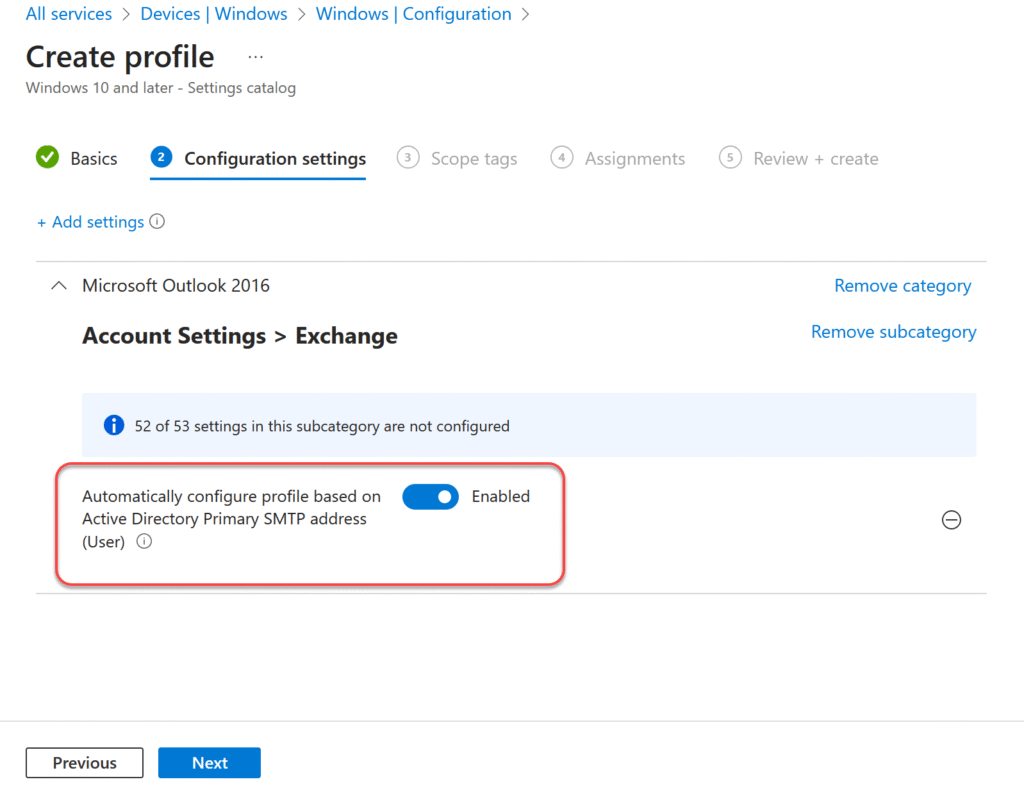
In the Settings Picker, search for “automatically configure profile”. From the results, select the category named ‘Microsoft Outlook 2016\Account Settings\Exchange.’ Select the setting “Automatically configure profile based on Active Directory primary SMTP address (User)” and close the settings picker.

Activate the policy setting Automatically configure profile based on Active Directory primary SMTP address (User) by sliding the toggle to the right. The policy setting is now enabled. Click Next.
In the scope tags section, you specify scope tags. Specifying scope tags is optional, and you may skip this step. Click Next.
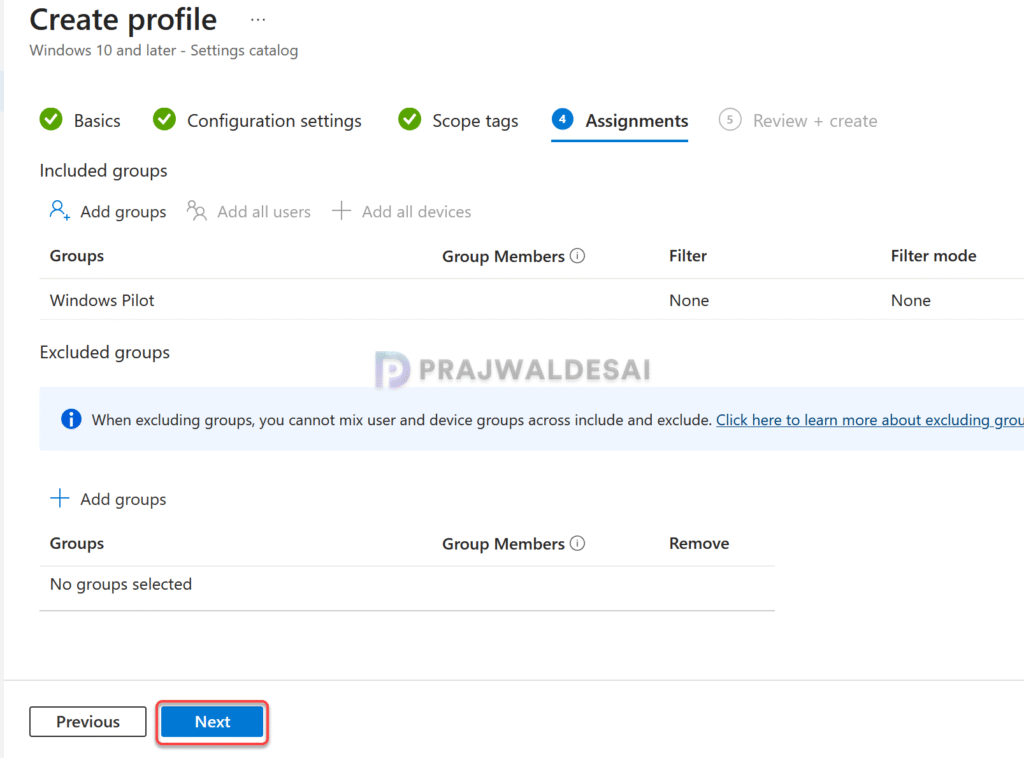
In the Assignments window, select the Entra security user groups to which you want to assign the policy. I recommend deploying the profile to a few test user groups first and then expanding it to more users if the testing is successful. Select Next.
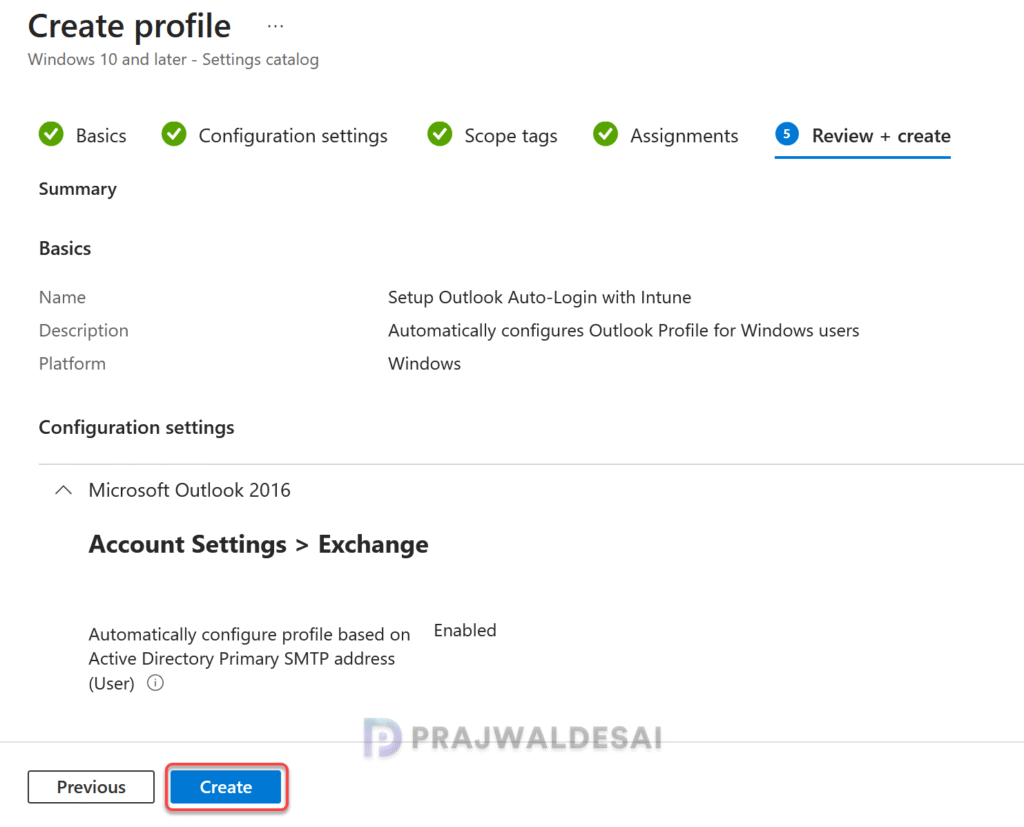
On the Review + Create page, review all the policy settings that you have configured so far and select Create. A new policy is created, and you can find it under the list of Configuration Profiles.
Update MS Intune Policies
To speed up the policy assignments in your tenant, you can manually sync Intune policies using different methods on your enrolled Windows computers, including PowerShell. The sync action will force devices to immediately check-in with Intune and retrieve the latest policies.
Monitor Outlook Auto Login Intune Policy
To monitor the Outlook auto login policy assignments in Intune, go to Devices > Windows > Configuration and here select the Setup Outlook Auto login profile. On the Policy overview page, check the device and user check-in status. Here you will find the number of devices or users on which the policy has been applied successfully. The view report button lets you see the names of devices or users for which the policy deployments have been successful.
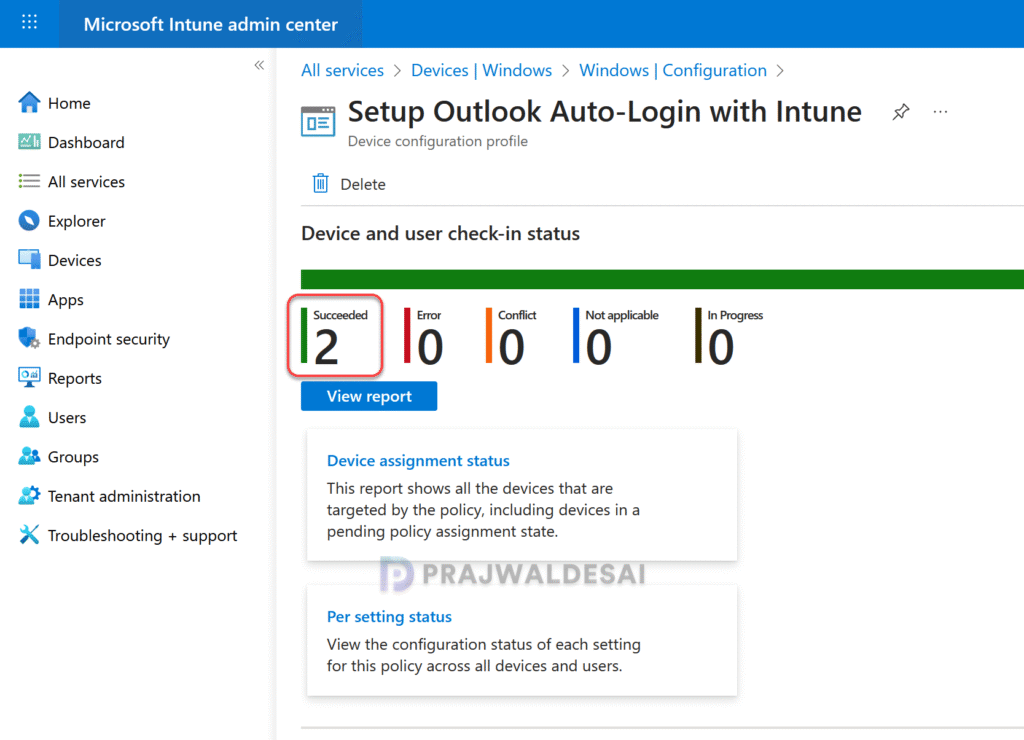
From the screenshot shown above, we see that policy assignments are successful and there are no errors observed. If you encounter any errors, jump to the troubleshooting section at the end of the post.
End User Experience
Log in to a Windows device targeted by the policy, ensuring the Outlook profile has not yet been configured. Click on Start and launch the new Outlook app. You’ll notice that Outlook automatically creates the profile based on the user’s primary SMTP address from Active Directory. The user does not need to manually enter credentials.

Wait for the Outlook to set up a local copy of the mailbox and once this is done, the user has got all emails in the Outlook. That was so quick and easy!!

Troubleshooting Automatic Login issues for Outlook
- In some cases, the outlook Autologin policy may fail to apply to certain users. To troubleshoot these issues, review the essential Intune IME logs. In addition, review the Event ID 814 in Event viewer. Use the following path: Applications and Services Logs > Microsoft > Windows > Devicemanagement-Enterprise-Diagnostics-Provider > Admin.
- If you encounter profile assignment failure on a remote device, generate an MDM diagnostic report for IT support. This can be done from Settings > Accounts > Access work or School > Info. Click on the Create Report button.
- Ensure the user has a valid Intune license if the Outlook profile isn’t created on first sign-in.
- Check Entra ID sign-In logs for any authentication issues if the Outlook fails to sign in with user’s credentials.
That concludes the guide on configuring Outlook profile for users based on AD primary SMTP address via Intune. By deploying this policy, users can seamlessly access Outlook without manual login, improving productivity and reducing login issues.
