

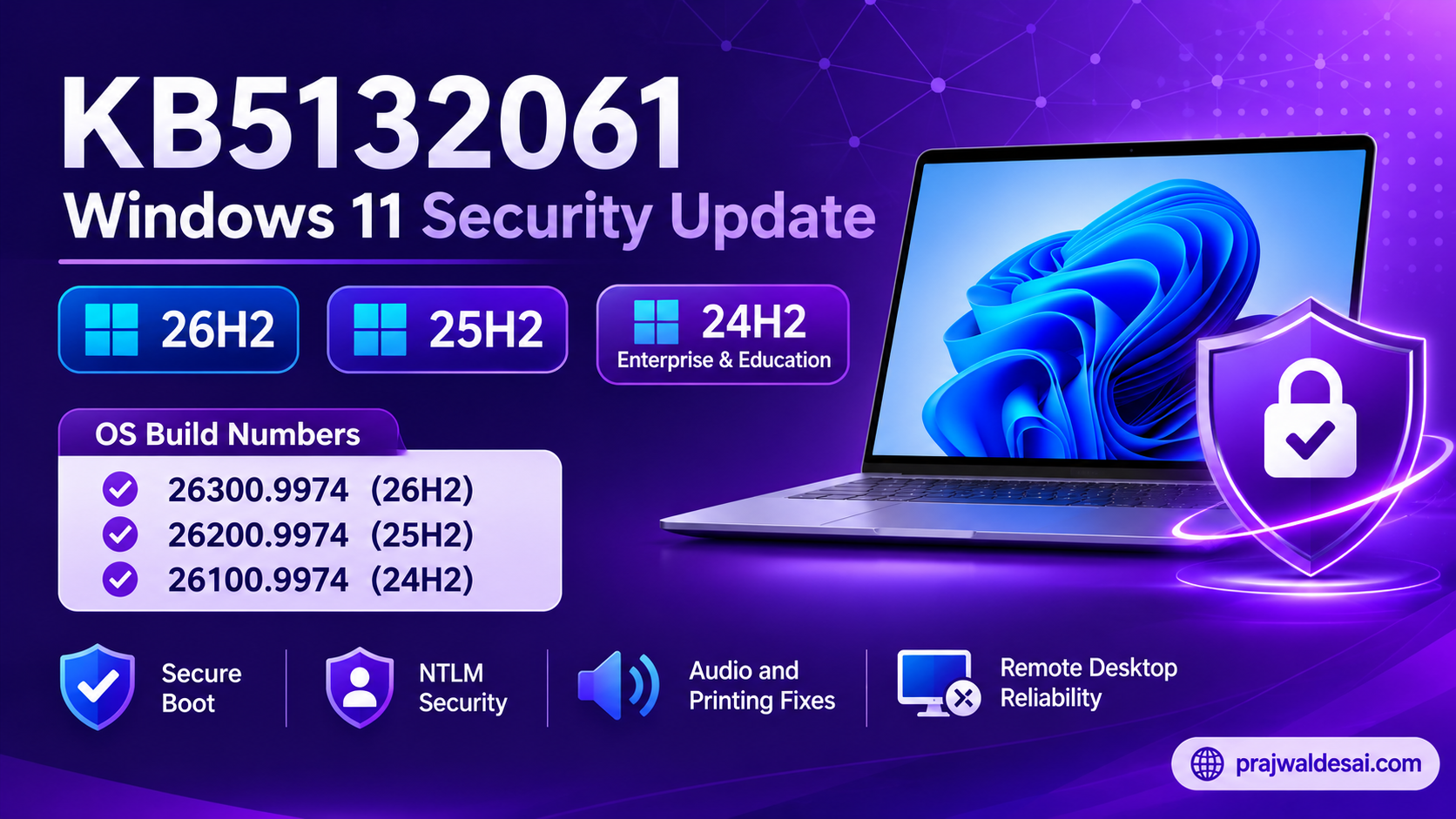
Microsoft has released Windows 11 KB5132061 update for versions 26H2, 25H2, and 24H2. The November 2026 update includes important security patches, quality improvements, and several features previously introduced in the KB5127936 preview release.
Unlike preview updates, KB5132061 is a mandatory Patch Tuesday security release that includes significant vulnerability fixes, authentication security improvements, and reliability updates. Businesses and IT administrators will particularly benefit from the strengthened NTLM protections, Secure Boot certificate deployment improvements, and fixes for Remote Desktop and Active Directory printer deployments.
Most users can install this update through Windows Update on their home PCs. For organizations, the security content alone makes deployment a priority. Administrators looking to deploy the November 2026 update can use enterprise update management solutions such as WSUS, Configuration Manager, and Microsoft Intune.
Fixes and improvements in the KB5132061 update
The Windows 11 November 2026 update includes security and quality improvements:
- Security: Resolves vulnerabilities; enhances NTLM security to mitigate relay attacks; auditing for unsigned connections.
- Secure Boot: Expands device targeting for automatic new certificate deployment.
- Audio: Fixed USB Audio 1.0 devices failing with error code 10 after updates.
- Printing: Resolved Error 87: The parameter is incorrect. The issue was introduced by an October 2026 update and is now resolved.
- Date/Time: Adjusted Cuba’s DST rules for extended 2026-2027 period.
- Remote Desktop: Fixed RDP certificate mismatch issue from October 2026 update.
- PowerShell: Enforced stricter UTF-8 encoding validation for script signing; invalid scripts require re-encoding and resigning.
For other fixes, please refer to the November 10, 2026—KB5132061 (OS Builds 26300.9974, 26200.9974 and 26100.9974).
In addition to the above listed improvements and bug fixes, this update includes improvements from the following previously released updates:
- October 13, 2026 – KB5127648 (OS Builds 26300.9711, 26200.9711 and 26100.9711)
- October 26, 2026 – KB5134133 (OS Builds 26300.9725, 26200.9725 and 26100.9725)
- October 28, 2026 – KB5127936 (OS Builds 26300.9818 and 26200.9818) Preview
Download KB5132061 Security Update
To manually download the KB5132061 cumulative update preview standalone package(s), go to the Microsoft Update Catalog website and get it for your version of Windows 11. This should be done only when the update is not listed under Windows updates.
Installing Windows 11 KB5132061 Update
The KB5132061 security update is offered through Windows Update for devices running Windows 11 26H2, 25H2, and 24H2. If you don’t see the update listed, open the “Windows Update” settings, and click the “Check for Updates” button.
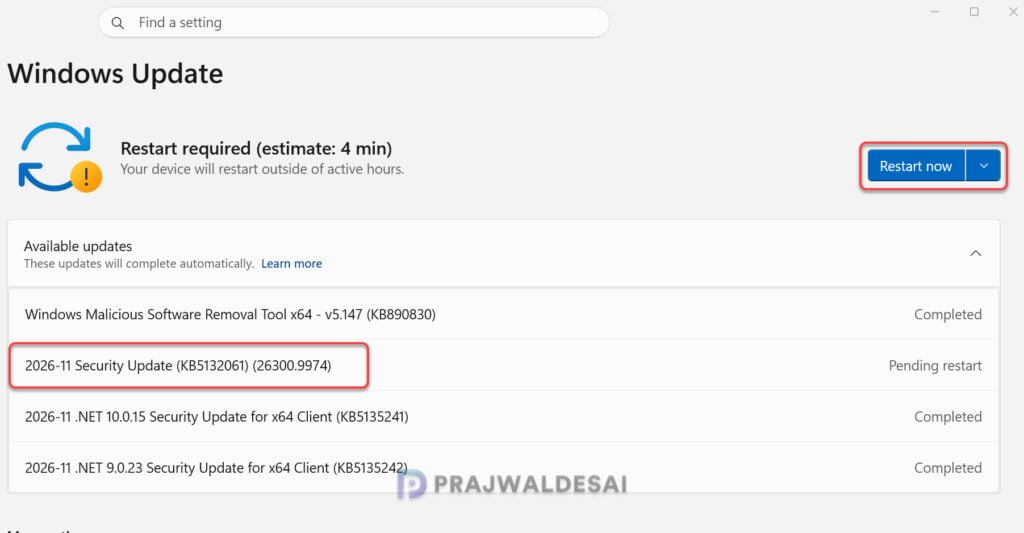
The 2026-11 Security Update (KB5132061) (26300.9974) update begins to download, and wait for it to complete the installation. The update requires a system reboot to complete the installation. Simply click the “Restart Now” button to restart your computer.
After installing the October 2026 update, the devices are updated to the following build numbers:
- Windows 11 24H2: OS build 26100.9974
- Windows 11 25H2: OS build 26200.9974
- Windows 11 26H2: OS build 26300.9974
Deploy Windows 11 November 2026 Update using Intune
The Windows 11 KB5132061 update can be deployed by configuring an expedite policy in Intune and assigning it to the appropriate groups containing Windows 11 26H2, 25H2, and 24H2 devices. For more information, see how to expedite Windows quality updates in Intune.
- Sign in to the Intune admin center. Go to Devices > Windows > Windows Updates > Quality Updates.
- Create a new Expedite policy and enter a descriptive name for the profile.
- Select the Windows quality update “11/10/2026 – 2026.11 B Security Update for Windows 10 and later” from the drop-down list.
- Specify the number of days to wait before a restart is enforced.
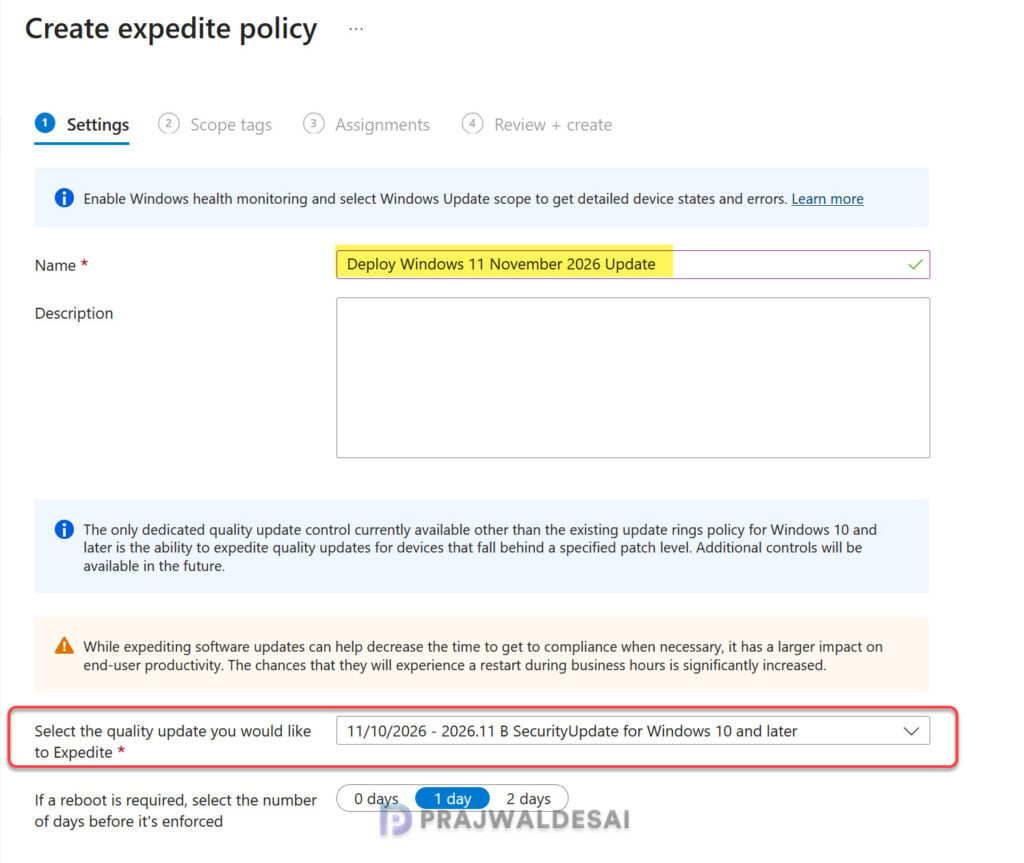
On the Assignments tab, select Add groups and then select device or user groups to assign the policy. Click Next. On the Review+Create page, take a look at the expedite policy settings. If it’s all good, click Create. After the policy is created, it is deployed to assigned groups.
Installing KB5132061 Update using WSUS/SCCM
Organizations that rely on WSUS or Configuration Manager to distribute software updates to on-premise devices can deploy the KB5132061 update efficiently. If you don’t see the update either in WSUS or SCCM, you must manually import the update into WSUS.
If you’re using WSUS standalone in your setup, right-click the update and approve it. I suggest rolling out the update to a group of pilot devices initially, and once confirmed that the update causes no issues, proceed to deploy it across all Windows 11 devices. The deployment occurs based on the schedule you’ve configured.
To patch the same update using Configuration Manager, ensure you open the console and synchronize the software updates. This will display all the latest updates from WSUS, including those you manually imported into the console.
Once the sync is complete, go to Software Library > Software Updates > All Software Updates. In the search bar, type “KB5132061” and click search. You should now see the update 2026-11 Cumulative Update for Windows 11, version 26H2 for x64-based Systems (KB5132061) (26300.9974) listed in the console. From here, you can refer to the SCCM patching guide to deploy it to your Windows devices.
KB5132061 Known Issues
No known issues have been reported with this update. However, if you intend to deploy it to Windows 11 devices using SCCM or Intune in your organization, it’s advisable to first install it on a pilot group of devices. After thorough testing, you can proceed to roll it out to a broader group of devices.
Uninstalling the Update
If you haven’t installed the Windows 11 November 2026 update yet, you may pause updates in Settings. If you’ve already installed the update and you are encountering some known issues, go to Settings > Windows Update > Update history > Uninstall updates. Alternatively, you may also use PowerShell to list the updates and uninstall them.
Lastly, here’s a comprehensive guide by me detailing the updates released for each version of Windows 11, including their respective KB numbers and build numbers.
